Welcome to the

Metta Tropical Collective

Cultivating the soul of leadership, community, and culture from which radically wiser civilizations can emerge and take root in service of the flourishing of all life.

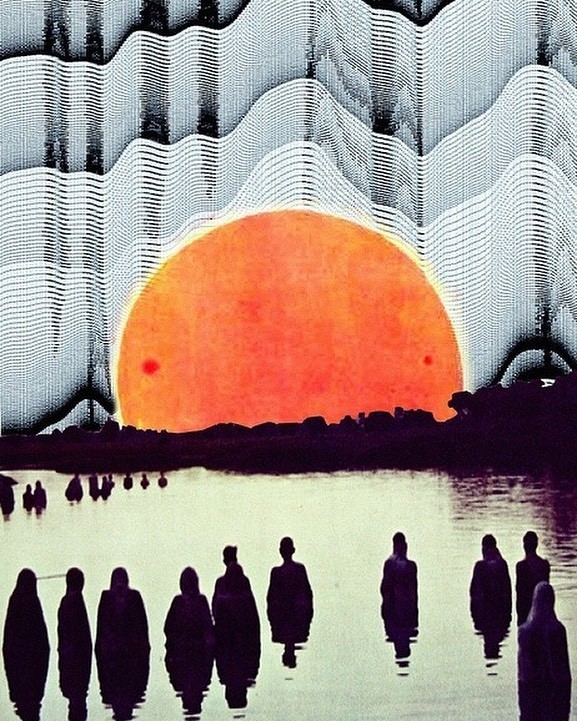
Contemplative group of people looking at the descending sun from within a river

We are living through the unraveling of a world whose success stories are starting to collapse.

And many of our attempts to respond to our predicament have only deepened it—reproducing the very logic of separation, extraction and control that created it.

Metta Tropical Collective is an experimental, Brazilian-based community of transformation, inquiry and practice, calling together postactivist educators, thinkers, artists, leaders and change-makers who feel the depth of the crisis we are living through, refuse to look away, and long to meaningfully participate in how we respond. We gather those who sense that any relevant response to this moment must be rooted in a fundamentally different relationship with all life — self, other, world, and the sacred.

We come together not to optimize a broken system or try to make it work for a greater number of humans and species, but to question and transform its underlying foundations. Through developmental spaces, intimate community, radical inquiry, and collective practice, we explore and cultivate the conditions needed in this moment of systemic breakdown to awaken our souls, reinhabit our bodies, decolonize our desires, and reforest our imagination to become more trustworthy and wiser participants in the work of planetary healing.

Tropical woman collage

Why We Exist

Throughout history, in times of societal collapse, oppression, and rupture, the failures and contradictions of our dominant ways of seeing, being, and relating in the world become impossible to ignore. It is during these moments that new forms of education and community have always emerged to take on the responsibility of envisioning a radically different future and carrying forward what would otherwise be lost.

Monasteries — organizing life around contemplation, ethical discipline, community, and the transmission of wisdom across generations

Mystery Schools — forming seekers through initiation, symbol, disciplined practice, and encounters with the sacred

Terreiros — sustaining ancestral knowledge, ritual, cosmology, healing, and communal belonging in the face of centuries of persecution and erasure

Folk Schools — educating people for life, participation, culture, and democratic agency rather than primarily for credentials or employment

Quilombos — creating autonomous forms of community, resistance, kinship, and collective life beyond systems built on domination

Indigenous communities — sustaining place-based languages, cosmologies, ecological knowledge and ways of life rooted in interdependence

Aboriginal art piece

Each created the structures, practices, relational life, pedagogies, and rites of passage needed to orient human beings toward what is most meaningful, and to develop the capacities their moment required. They were not schools in the modern sense. They were architectures of transformation — places where new ways of being could be practiced until they became real.

We are living through such a moment again, and our commitment is to build the architectures of transformation this time is asking for.

We call them wisdom-centered educational architectures: developmental ecologies of practice, training, ritual, inquiry, and relationship, built to hold the long arc of human formation this moment demands. Not preparing people to succeed in the world as it is, but supporting them to question its foundations and develop the spiritual depth, relational maturity, systemic understanding, and reverence for life required to hospice a world that is ending, while cultivating the foundations of what comes next.

These architectures exist to hold the magnitude of aspiration and devotion of those who feel the depth of our crisis in their bones, long to give their lives to something worthy of this moment, yet struggle to find communities capable of recognizing, accompanying, and nurturing such commitment.

This is what we are building.

Learn about our Educational Architecture

A Confluence of Lineages

We are rooted in Brazil and Latin America — shaped by this territory, this language, and its histories.

Across the world, remarkable individuals, communities, and initiatives are already carrying the seeds of a new cultural paradigm. Spiritual practitioners, educators, artists, systems thinkers, regenerative projects, and Indigenous communities have been creating and protecting essential cosmologies, practices, ideas, wisdom, and forms of social organization for navigating the metacrisis.

Yet most remain at the edges of our culture, isolated within their own communities, languages, geographies, or fields of practice. They rarely meet each other, and almost never within a container that could hold them over time, around a shared purpose, in service of forming a different kind of leadership. Without that, each remains an offering someone might encounter, rather than a path someone could walk.

This is what our educational architecture is for: to offer a home where these ways of seeing, being, and knowing can come back into relationship — and where the depth of understanding, practice, and transformation this moment asks of us becomes possible.

Our work emerges from the confluence of four main lineages:

I.

Contemplative Traditions

The spiritual traditions of the world — especially the Buddhist lineage — which have shaped our understanding of reality and who we are within it. Each offers distinct teachings and practices for grounding a life in the spiritual dimension and aligning action with love, compassion, and truth.

Explore sources of inspiration

Selected sources of inspiration

These references indicate sources of learning and inspiration, not necessarily formal partnerships or affiliations.

II.

Systemic Inquiry

The rigor of the systems and complexity sciences, the regenerative movement, decolonial thought, metamodernism, and the metacrisis conversation — which have helped us perceive the historical, ecological, and civilizational patterns producing this moment, rather than reacting to its symptoms.

Explore sources of inspiration

Selected sources of inspiration

These references indicate sources of learning and inspiration, not necessarily formal partnerships or affiliations.

III.

Developmental Practice

The fields of human development, depth psychology, parts work, trauma integration, emotional regulation, and relational practice — which help us understand how human beings actually grow up, mature, and come to embody responsible ways of relating to all life.

Explore sources of inspiration

Selected sources of inspiration

These references indicate sources of learning and inspiration, not necessarily formal partnerships or affiliations.

IV.

Ancestral Ways of Being

The embodied, ecological, and land-based wisdom carried by Indigenous, quilombola, and Afro-diasporic communities, who, despite centuries of erasure and forced collapse, have carried, protected and cultivated ways of seeing, being, and relating that the rest of the world is only now beginning to understand it needs.

Explore sources of inspiration

Selected sources of inspiration

These references indicate sources of learning and inspiration, not necessarily formal partnerships or affiliations.

We have been informed and transformed by these lineages over many years, and we come to them with humility, curiosity, and gratitude, not claiming to live fully within any of them and recognizing that each carries both profound gifts and real limitations.

What we are attempting is neither the importing of Global North frameworks nor the romanticization of ancestral wisdom. It is something more demanding: holding them in genuine relationship, and letting each challenge, deepen, and transform the others — and us. We are interested in what becomes possible when systemic rigor, contemplative depth, developmental practice, and the living intelligence of this territory meet, and in how such a convergence can transform the ways we see, relate, and act in the world.

From this encounter, new forms of pedagogy, community, and culture can emerge — forms this century requires, and that could only take root here, where these lineages have a reason to meet, and where the urgency of this moment makes their separation no longer affordable.

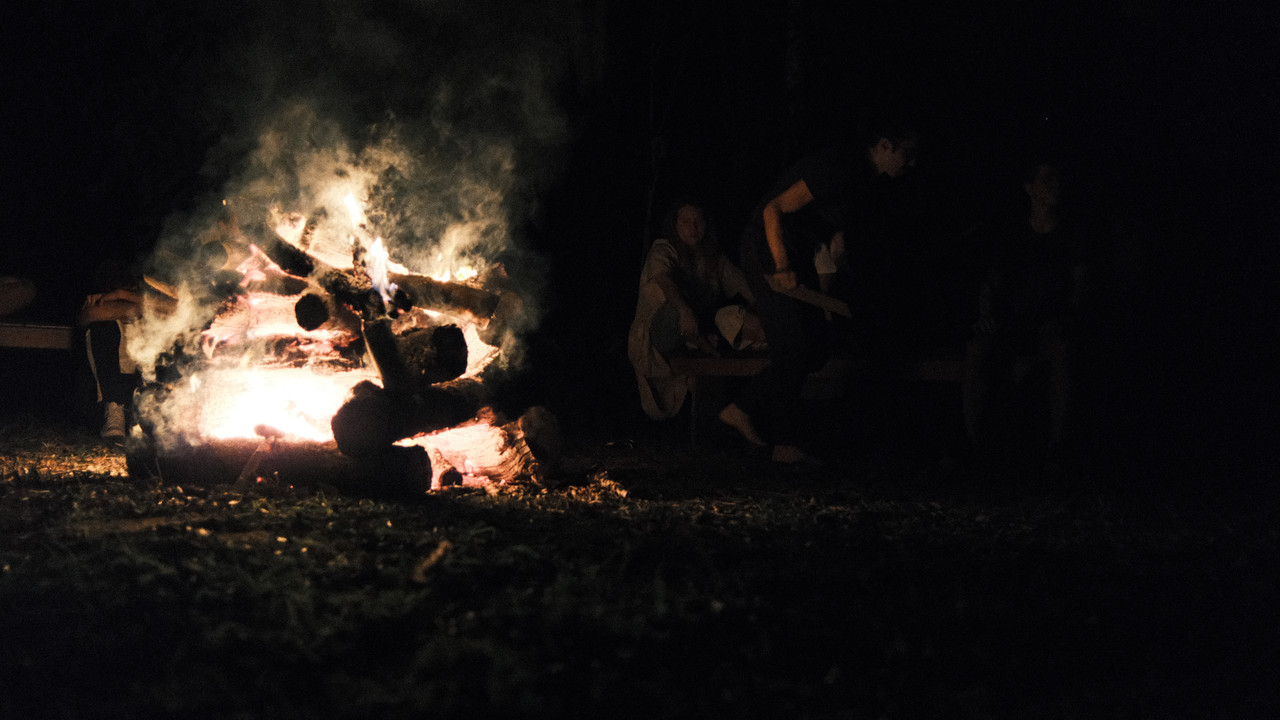
Gathering around the fire

Why Wisdom?

Within our work, we often draw from a framework developed by Daniel Schmachtenberger and Nate Hagens, and later evolved by Vanessa Machado de Oliveira that distinguishes between narrow boundary intelligence, wide boundary intelligence, and wisdom—sometimes called whole-shebang wisdom.

We find this framework helpful not only for understanding how humans relate to complexity and systemic challenges, but for clarifying the direction our collective efforts must ultimately move toward: wisdom.

The Center for Humane Technology describes one of the defining challenges of our time as the wisdom gap: the growing divide between rising global complexity and humanity's capacity to respond with sufficient coherence, discernment, and care. We live in a world overflowing with information, intelligence, and technological power, yet increasingly unable to navigate wisely the complexity we have created.

In this sense, the metacrisis is fundamentally a wisdom crisis.

By wisdom, we do not mean expertise, intelligence, or the accumulation of knowledge. We mean the capacity to perceive reality accurately, to discern what truly matters in a given context, and to participate in life in ways that serve the flourishing of the larger whole.

Wisdom is deepened by engaging with reality and the world through multiple ways of knowing and depths of relationality, expanding our capacity to sense what is needed in a given moment and respond accordingly.

It allows us to hold complexity with humility and care, and to move beyond fragmented grasps for certainty or control. It shifts our relationship with the world from subject-object to subject-subject: from managing reality to participating within it. To speak of wisdom, ultimately, is to speak of integration — reuniting what modernity has fragmented.

As we face the consequences of the metacrisis, the cost of continuing to incentivize narrow-boundary intelligence becomes increasingly catastrophic. What this moment requires is a societal movement from narrow boundary, to wide boundary, and eventually toward wisdom. Yet the infrastructures capable of cultivating such transition remain largely absent from modern society.

Our work is an attempt to help create them.

“
Education is the Metacrisis:It’s time to see our planetary crises as a species-wide learning opportunity.
”
— Zak Stein

Our Work

Building wisdom-centered educational architectures in a time between worlds

There is no established field, no proven blueprint or model we can rely on to build these educational architectures. What exists are fragments of an answer, scattered across traditions, communities, and experiments. This is precisely why the work focuses on four things at once: experimental, prototyping the containers this moment needs; investigative, reflecting on what we are learning; connective, weaving a trustworthy ecosystem to help us build this; and imaginative, expanding what our culture can perceive and imagine.

Our work unfolds across four main pillars:

Hover over an image to read more

1. Transformative Educational Lab
The living laboratory where our educational architecture is continuously tested, refined, and deepened. Through retreats, residencies, courses, and immersive programs — developed in-house and in collaboration with fellow educators — we keep experimenting with what it actually takes to form human beings prepared for this moment.

1. Transformative Educational Lab

Education for the end of the world as we know it

Learn More
2. Research & Inquiry
Deep investigation into what has brought us here, what is happening now, and what is trying to emerge. Through transdisciplinary research, original essays, collaborative thinking, social cartographies, and curated collections, we contribute to the narrative-building and cultural sensemaking that can orient wise action in a time of uncertainty.

2. Research & Inquiry

Investigating the questions shaping our world

Learn More
3. Ecosystem Integration

We map, integrate and connect initiatives, practices, communities, and institutions responding to different dimensions of the metacrisis. By making this ecosystem more visible, comprehensive and relational, we:

1) Help isolated communities find one another.
2) Connect people with meaningful pathways and organizations.
3) Integrate multiple educational initiatives and practices into more robust and coherent developmental journeys.

3. Ecosystem Integration

Tending to the emerging fabric of a wisdom-centered culture

Learn More
4. Artistic & Cultural Interventions

We collaborate with artists and cultural practitioners to give form to emerging ways of seeing, being, and imagining life beyond the dominant paradigm. Through stories, images, music, rituals, and cultural artifacts, we seek to convey the depth of this crisis, the transformation it asks of us, and the horizons worth orienting towards, in ways that touch the heart and soul of our culture.

Making life-enhancing futures not only intellectually understandable, but emotionally and imaginatively available.

4. Artistic & Cultural Interventions

Expanding what our culture can perceive and imagine

Learn More(soon)
Stylized mountain landscape with moon

Ready to go deeper?

If you want to discover our work in more depth, we invite you to explore our Fellowship and Theory of Change.

Built with v0